Newsletter March 2026
3 min | 20 March 2026
Team update: reinforcements at PowerQ
Jorik has started as trainee Energy Officer
Jorik has been part of PowerQ as a trainee Energy Officer since October. With his background in Organization and Management Studies (Tilburg University) and an interest in the circular economy, he focuses on energy audits, client questions and the further automation of internal processes, contributing to sharper analysis and more efficient execution. Outside work he likes to travel; last year he spent four months exploring South-East Asia.
Louis is deepening his work on energy markets and procurement strategy
Louis completed his master's in Complex Systems Engineering and Management (Energy specialisation) at TU Delft and has since joined the PowerQ team. He works on energy audits, analyses energy markets and recently wrote a blog on the impact of solar panels and batteries on energy suppliers. Over the coming period he will build up his own client portfolio. He cycles to the office from Rotterdam every day.
What solar panels and batteries mean for your energy strategy
Solar panels, batteries and other major steps towards sustainability are valuable, but they also change your consumption profile. That has direct consequences for energy prices, supplier risks and the business case behind your investment.
SPRILA subsidy: a new round for charging infrastructure in 2026
The SPRILA scheme has reopened. In 2026 organisations can again apply for subsidy towards building private charging infrastructure on owned or leased land, covering charging stations, cabling, grid connections and in some cases batteries.
Where in 2025 many applications were still submitted ad hoc as the deadline approached, we now see organisations taking a more strategic approach to mobility. Charging infrastructure is increasingly being linked to fleet policy, grid capacity and energy contracts.
The Strait of Hormuz under pressure: consequences for large-scale energy procurement
The energy market is on the move again. Rising gas prices and geopolitical tension, such as that around the Strait of Hormuz, show how sensitive the market remains to external factors. For healthcare institutions and other large energy users this translates directly into uncertainty in costs, contracting and budgeting.
In a market like this it is important to look beyond the day price alone. Energy costs are determined to a significant degree by supplier premiums, contract terms and the risk profile suppliers assess. As volatility increases, those premiums often rise and terms become stricter.
Waiting for a calmer market seems logical, but it also means risks stay uncovered. The question is therefore less whether prices will fall further, and more how much uncertainty you are prepared to accept as an organisation.
A spread purchasing strategy, combined with good insight into consumption and clear internal decision-making, helps to keep price swings manageable. That produces what ultimately matters most to many organisations: calm, control and predictability.
Explainer videos
Since the start of this year we have been sharing short videos on current energy questions on our LinkedIn page. Several are now live, covering solar panels and consumption profiles, stop-loss strategies, strategic energy procurement and energy budgeting, among others. New videos are added weekly, so follow us on LinkedIn if you want to stay up to date.
Related insights
3 min | 13 July 2026
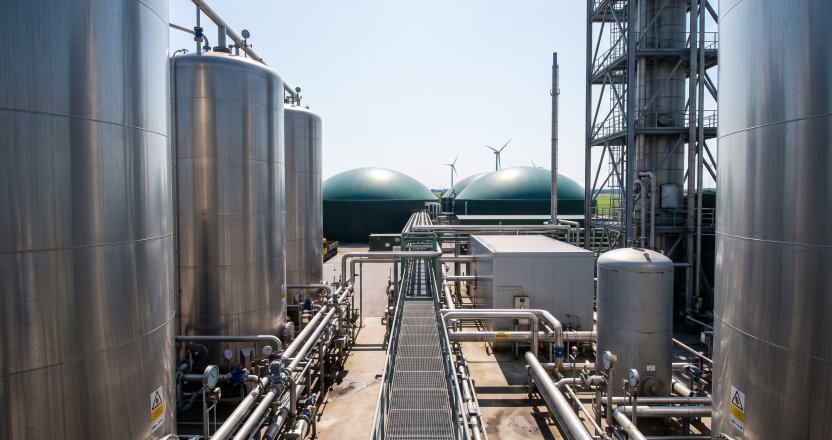
The green gas blending obligation: what is coming your way?
The Netherlands is introducing a blending obligation: energy suppliers will have to deliver an annually rising share of green gas. What does that mean for your invoice?
Read more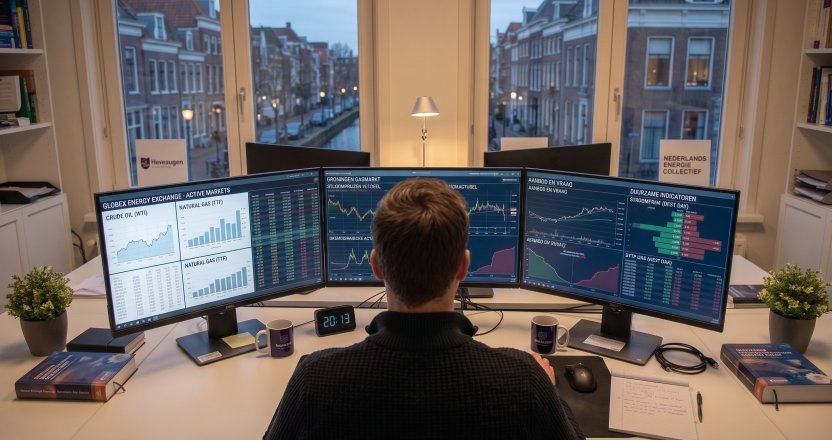
6 min | 15 June 2026
The energy market: where do we stand in mid-June 2026?
Price falls can reverse within a short time, while geopolitics, stocks and supply routes continue to steer the market. The key signals at a glance.
Read more
4 min | 30 April 2026
Iran, Hormuz and the energy market: where do we stand at the end of April 2026?
The disruption around the Strait of Hormuz led in March to the largest disruption in the history of the world oil market. Where do we stand at the end of April?
Read moreA first conversation works best over the portfolio you already have.

Bring twelve months of invoices for one entity. In 45 minutes we will show you what coordinated procurement under one mandate would change. No deck. No proposal.