Iran, Hormuz and the energy market: where do we stand at the end of April 2026?
4 min | 30 April 2026
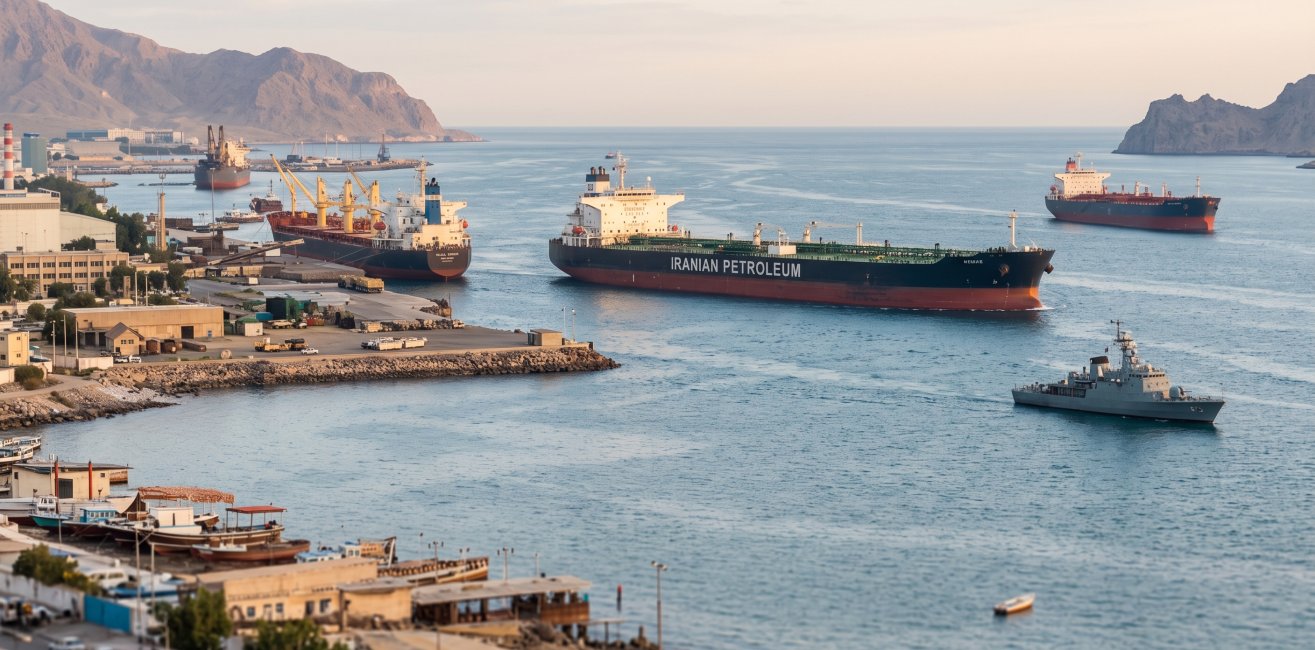
The unrest around Iran is working through into the energy market. The disruption around the Strait of Hormuz that began at the end of February led in March to what the International Energy Agency (IEA) calls “the largest disruption in the history of the world oil market”. Around 20% of global LNG supply temporarily fell away and Dutch TTF doubled in mid-March to above €60/MWh. In April the acute pressure eased after a ceasefire between the United States and Iran, while shipping through Hormuz has yet to recover. The market therefore remains sensitive to new price movements and rising risk premiums.
For healthcare institutions and other large energy users this matters, because geopolitical unrest works through further than the day price. The effect spreads via price expectations, contracting, supplier premiums and budget certainty for the years ahead. That puts strategic energy procurement high on the agenda once again.
Why Hormuz remains relevant
The Strait of Hormuz is one of the most important energy routes in the world. In 2024 roughly a fifth of global LNG trade passed through it. As soon as the market doubts safety or throughput, that is priced in almost immediately.
For European large energy users, disruption on this route feeds through via global price formation. Europe depends directly on Qatar for only a limited share of its LNG, but when the world market tightens it has to compete on the spot market with Asian buyers. That competition feeds straight through into TTF.
No immediate physical scarcity, but an unsettled market
In March the European Commission established that there was no physical scarcity at EU level at that point. At the same time the Commission warned that the market disruption would not be short-lived, and called on member states to build up their gas stocks in good time and in a coordinated way ahead of the 2026/2027 winter.
European gas storage ended the 2025/2026 winter at a historically low level of around 30% of capacity, partly because of a severe winter. The picture that leaves is a market without an immediate physical crisis, but with continuing sensitivity to fresh news, risk premiums and shifting price expectations.
Why Europe remains exposed
Europe remains heavily dependent on energy imports. Unrest around Iran therefore works through in two ways: via the availability of LNG and via price pressure on the world market. That is felt above all by large energy users.
Nor does the effect stop at gas. ACER reports that daily price swings on the European wholesale market for electricity are now around five times as large as in 2020. Gas-fired power stations remain important for price formation, particularly when solar output falls away. For organisations with high consumption that calls for protection against volatility in both gas and power.
What this means for large energy users
The developments in March and April show once again how quickly external unrest can feed through into the energy market. For organisations that have already bought on a spread basis, that confirms the value of strategic energy procurement. A fixed click strategy and clear frameworks provide protection against volatility, even when the market moves sharply again.
For organisations that still have open positions, this is a logical moment to look again at contract structure, click strategy, open volume and the fit between procurement, consumption profile and investment capacity. The core question for risk management is how much risk is still open, and whether that fits the budget and the room the organisation has to absorb price swings.
Conclusion
At the end of April 2026 the first shock of March has eased, but the market remains vulnerable. For healthcare institutions and other large energy users that underlines once again the importance of timely risk management and strategic energy procurement. A suitable contract structure, spread purchasing and sharp insight into open positions help to create budget certainty and bring more calm to budgeting and decision-making.
Related insights
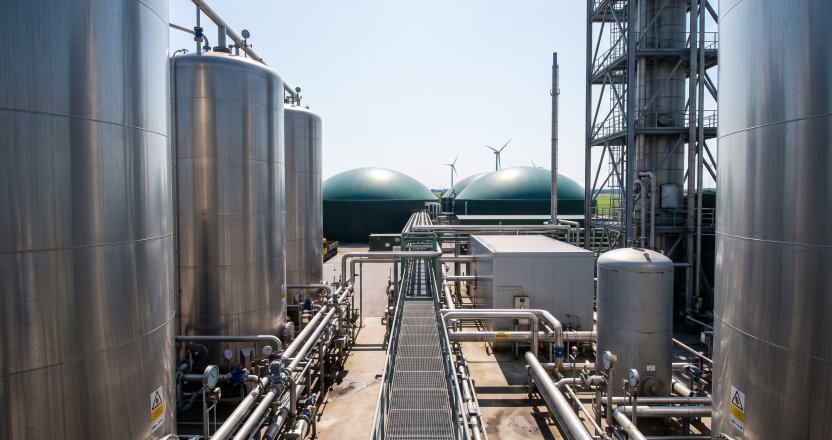
3 min | 13 July 2026
The green gas blending obligation: what is coming your way?
The Netherlands is introducing a blending obligation: energy suppliers will have to deliver an annually rising share of green gas. What does that mean for your invoice?
Read more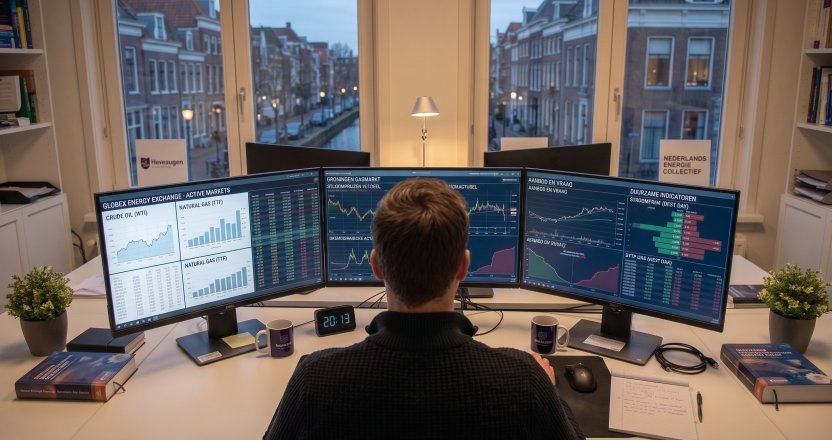
6 min | 15 June 2026
The energy market: where do we stand in mid-June 2026?
Price falls can reverse within a short time, while geopolitics, stocks and supply routes continue to steer the market. The key signals at a glance.
Read more
3 min | 20 March 2026
Newsletter March 2026
A team update, the impact of solar panels and batteries, the new SPRILA round and the tension around the Strait of Hormuz.
Read moreA first conversation works best over the portfolio you already have.

Bring twelve months of invoices for one entity. In 45 minutes we will show you what coordinated procurement under one mandate would change. No deck. No proposal.